Robotics makes it possible to act in the physical environment. Artificial intelligence can analyze images and data to recognize elements, highlight differences and support decisions. Integrated through software, these technologies can help automate defined tasks and make useful information available to production, quality and maintenance. The starting point is a concrete need: a check to repeat, a component to recognize, a situation to document. The project starts from the task and is verified in real working conditions.
Artificial intelligence applied to production allows machines to interpret images and automatically recognize what is correct and what is not: defects, anomalies, missing parts or wrong materials.
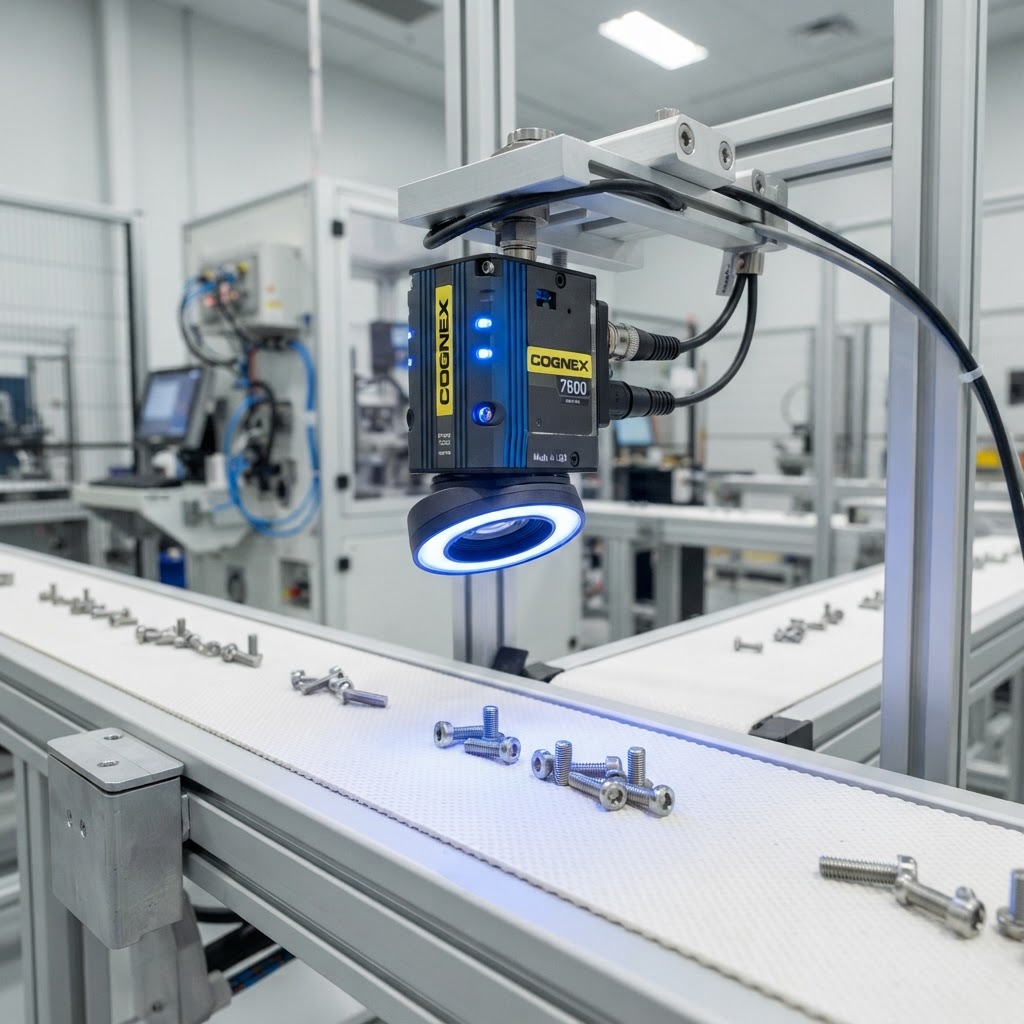
In our systems, AI is integrated into the production cycle: cameras acquire, algorithms classify, and the system reports anomalies in real time, returning feedback with photos and data to the line supervisor.
The models are trained on real images of your process: different product variants, lighting conditions and defect types. This way the system learns to tell the acceptable from the defective, with tolerance thresholds defined together with you.
Beyond quality control, AI supports traceability: every check produces photos, data and statistics you can consult over time, useful for analyzing trends, reducing scrap and acting before a defect becomes a batch to block.
Integration happens with what you already have: PLCs, lines and existing systems. AI does not replace your processes, it makes them more reliable and observable.
Industrial robotics
Execution of programmed movements and operations.
Machine vision
Image acquisition and analysis for defined checks.
AI
Recognition of patterns and possible anomalies through task-evaluated models.
Software
Coordination of activities, data linking and presentation of results.